

一、原子操作
原子操作是指在执行过程中不会被中断的操作,它被视为一个整体,要么完全执行,要么完全不执行。这种特性使得原子操作在多线程编程中具有重要的意义,因为它可以避免由于竞争条件(race condition)导致的数据不一致问题。例如,当我们对一个整型变量进行赋值时,看似简单的操作实际上可能会被分解为多个机器指令。如果在这些指令之间发生了线程切换,就可能导致数据竞争。
让我们以一个简单的 C 语言代码为例:
int v;  // 定义一个 int 类型的变量 v
v = 1; // 将 int 类型的变量 v 赋值为 1从表面上看,这段代码只是将变量 v 赋值为 1,似乎是一个单一的操作。然而,C 语言程序在编译后会被翻译成汇编指令,而这些汇编指令可能会包含多个步骤。例如,在某些架构上,上述赋值操作可能需要以下步骤:
- 将立即数
1加载到寄存器中。 - 将寄存器中的值写入内存地址(即变量
v的地址)。
如果在这些步骤之间发生了线程切换或其他中断,另一个线程可能会读取或修改变量 v 的值,从而导致不可预测的行为。因此,普通的赋值操作并不能保证线程安全。
为了确保操作的原子性,Linux 内核提供了一系列原子操作接口,这些接口利用了底层硬件的特性(如原子指令和内存屏障)来实现不可分割的操作。例如,Linux 内核中的 atomic_t 类型及其相关函数可以用于对整型变量进行原子操作。以下是一个使用原子操作的示例:
#include <linux/atomic.h>

atomic_t v;            // 定义一个原子类型的变量 v

atomic_set(&v, 1); // 使用原子操作将变量 v 设置为 1在这个例子中,atomic_set 是一个内核提供的原子操作函数,它能够确保设置操作是不可分割的。即使在多核处理器上,多个线程同时调用 atomic_set 也不会导致数据竞争。
二、原子相关 API
成功定义原子变量之后,必然要对原子变量进行读取、加减等动作,原子操作的部分常用 API 函数如下所示,定义在 内核源码/include/linux/atomic.h 文件中。
| 函数 | 描述 |
|---|---|
ATOMIC_INIT(int i) | 定义原子变量的时候对其初始化,赋值为 i |
int atomic_read(atomic_t *v) | 读取 v 的值,并且返回 |
void atomic_set(atomic_t *v, int i) | 向原子变量 v 写入 i 值 |
void atomic_add(int i, atomic_t *v) | 原子变量 v 加上 i 值 |
void atomic_sub(int i, atomic_t *v) | 原子变量 v 减去 i 值 |
void atomic_inc(atomic_t *v) | 原子变量 v 加 1 |
void atomic_dec(atomic_t *v) | 原子变量 v 减 1 |
int atomic_dec_return(atomic_t *v) | 原子变量 v 减 1,并返回 v 的值 |
int atomic_inc_return(atomic_t *v) | 原子变量 v 加 1,并返回 v 的值 |
int atomic_sub_and_test(int i, atomic_t *v) | 原子变量 v 减 i,如果结果为 0 就返回真,否则返回假 |
int atomic_dec_and_test(atomic_t *v) | 原子变量 v 减 1,如果结果为 0 就返回真,否则返回假 |
int atomic_inc_and_test(atomic_t *v) | 原子变量 v 加 1,如果结果为 0 就返回真,否则返回假 |
int atomic_add_negative(int i, atomic_t *v) | 原子变量 v 加 i,如果结果为负就返回真,否则返回假 |
下面对原子位操作进行讲解,和原子整形变量不同,原子位操作没有 atomic_t 的数据结构,原子位操作是直接对内存进行操作,原子位操作相关 API 函数如下:
| 函数 | 描述 |
|---|---|
void set_bit(int nr, void *p) | 将 p 地址的第 nr 位置 1 |
void clear_bit(int nr, void *p) | 将 p 地址的第 nr 位清零 |
void change_bit(int nr, void *p) | 将 p 地址的第 nr 位进行翻转 |
int test_bit(int nr, void *p) | 获取 p 地址的第 nr 位的值 |
int test_and_set_bit(int nr, void *p) | 将 p 地址的第 nr 位置 1,并且返回 nr 位原来的值 |
int test_and_clear_bit(int nr, void *p) | 将 p 地址的第 nr 位清零,并且返回 nr 位原来的值 |
int test_and_change_bit(int nr, void *p) | 将 p 地址的第 nr 位翻转,并且返回 nr 位原来的值 |
三、结构体
在 Linux 内核中,原子操作(Atomic Operations)是多线程编程和并发控制中的核心机制之一。为了确保在多处理器环境中对共享变量的操作是不可分割的(即不会被其他线程或处理器中断),内核提供了专门的数据结构和接口来实现原子性。其中,atomic_t 和 atomic64_t 是两个关键的结构体,分别用于处理 32 位系统和 64 位系统的整型数据原子操作。
在 Linux 内核源码中,atomic_t 和 atomic64_t 的定义位于头文件 include/linux/types.h 中。以下是它们的具体定义:
typedef struct {
    int counter;
} atomic_t;

#ifdef CONFIG_64BIT
typedef struct {
    s64 counter;
} atomic64_t;
#endif设计要点
从定义可以看出,这两个结构体的核心是一个名为 counter 的成员变量。对于 atomic_t,其 counter 类型为 int,通常对应于 32 位整数;而对于 atomic64_t,其 counter 类型为 s64,在 64 位系统中通常对应于 64 位整数。这种设计使得它们能够适应不同架构的需求,同时保持代码的可移植性和简洁性。
需要注意的是,atomic64_t 的定义依赖于宏 CONFIG_64BIT,这表明它仅在 64 位系统配置下有效。
四、内核使用场景
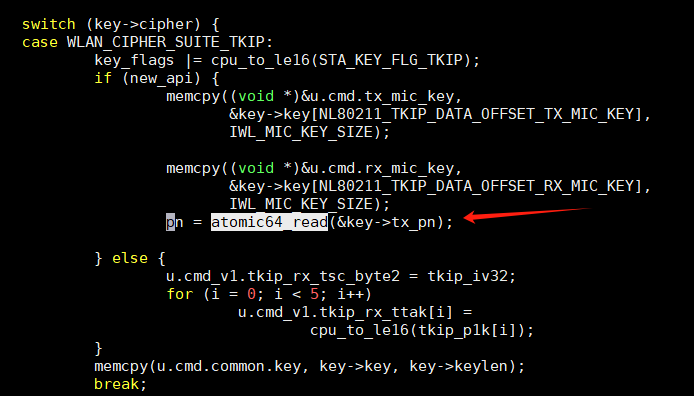
整形接口 atomic64_read:
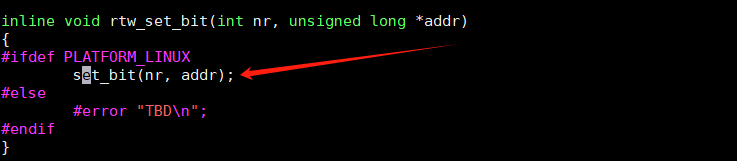
按位接口 set_bit:
五、实验
源代码下载
git clone git@gitee.com:yangxuesong314/linux-driver.git- 若之前已 git 拉取代码可以忽略
- 代码位于:
linux-driver/03.内核互斥锁技术/01.原子操作
#include <linux/init.h>
#include <linux/module.h>
#include <linux/fs.h>
#include <linux/cdev.h>
#include <linux/kdev_t.h>
#include <linux/uaccess.h>
#include <linux/delay.h>
#include <linux/atomic.h>
#include <linux/errno.h>

static atomic64_t v = ATOMIC_INIT(1);   // 初始化原子类型变量 v,并设置为 1

static int open_test(struct inode *inode, struct file *file)
{
    if (atomic64_read(&v) != 1) {       // 读取原子类型变量 v 的值并判断是否等于 1
        return -EBUSY;
    }
    atomic64_set(&v, 0);                // 将原子类型变量 v 的值设置为 0
    return 0;
}

static ssize_t read_test(struct file *file, char __user *ubuf, size_t len, loff_t *off)
{
    int ret;
    char kbuf[10] = "linux";
        printk("\nthis is read_test \n");
    ret = copy_to_user(ubuf, kbuf, strlen(kbuf));
    if (ret != 0) {
                printk("copy_to_user is error \n");
    }
        printk("copy_to_user is ok \n");
    return 0;
}

static char kbuf[10] = {0};

static ssize_t write_test(struct file *file, const char __user *ubuf, size_t len, loff_t *off)
{
    int ret;
    ret = copy_from_user(kbuf, ubuf, len);
    if (ret != 0) {
                printk("copy_from_user is error\n");
    }
    if (strcmp(kbuf, "linux") == 0) {
        ssleep(4);
    } else if (strcmp(kbuf, "kernel") == 0) {
        ssleep(2);
    }
        printk("copy_from_user buf is %s \n",kbuf);
    return 0;
}

static int release_test(struct inode *inode, struct file *file)
{
    atomic64_set(&v, 1);                // 将原子类型变量 v 的值赋 1
    return 0;
}

struct chrdev_test {
    dev_t           dev_num;
    int             major, minor;
    struct cdev     cdev_test;
    struct class   *class_test;
};

struct chrdev_test dev1;

struct file_operations fops_test = {
    .owner   = THIS_MODULE,
    .open    = open_test,
    .read    = read_test,
    .write   = write_test,
    .release = release_test,
};

static int __init atomic_init(void)
{
    if (alloc_chrdev_region(&dev1.dev_num, 0, 1, "chrdev_name") < 0) {
                printk("alloc_chrdev_region is error \n");
    }
        printk("alloc_chrdev_region is ok \n");
    dev1.major = MAJOR(dev1.dev_num);
    dev1.minor = MINOR(dev1.dev_num);
        printk("major is %d,minor is %d\n",dev1.major,dev1.minor);
    cdev_init(&dev1.cdev_test, &fops_test);
    dev1.cdev_test.owner = THIS_MODULE;
    cdev_add(&dev1.cdev_test, dev1.dev_num, 1);
    dev1.class_test = class_create(THIS_MODULE, "class_test");
    device_create(dev1.class_test, 0, dev1.dev_num, 0, "device_test");
    return 0;
}

static void __exit atomic_exit(void)
{
    device_destroy(dev1.class_test, dev1.dev_num);
    class_destroy(dev1.class_test);
    cdev_del(&dev1.cdev_test);
    unregister_chrdev_region(dev1.dev_num, 1);
        printk("module exit \n");
}

module_init(atomic_init);
module_exit(atomic_exit);
MODULE_LICENSE("GPL v2");驱动加载:

测试应用代码:
#include <stdio.h>
#include <sys/types.h>
#include <sys/stat.h>
#include <fcntl.h>
#include <string.h>
#include <unistd.h>

int main(int argc, char *argv[])
{
    int fd;
    char str1[10] = {0};
    fd = open(argv[1], O_RDWR);
    if (fd < 0) {
		printf("file open failed \n");
        return -1;
    }
    if (strcmp(argv[2], "Linux") == 0) {
        write(fd, "Linux", 10);
    } else if (strcmp(argv[2], "kernel") == 0) {
        write(fd, "kernel", 10);
    }
    close(fd);
    return 0;
}