

USB core
usbcore-y 这个obj-y的区别?
usbcore这个模块代表的不是某一个设备,而是所有USB设备赖以生存的模块,它就是USB子系统。
一、拓扑结构
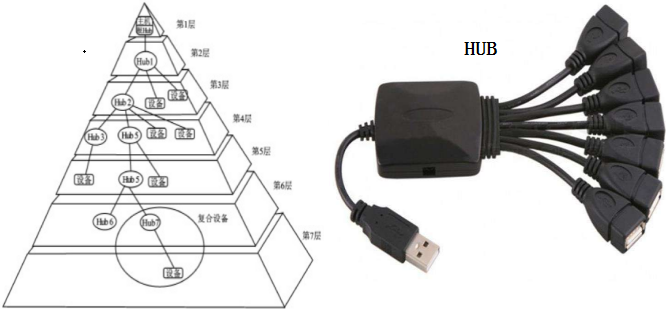
之所以要规定这个树形拓扑结构是为了避免环形连接;
一条USB总线有且只有一个USBHost,对应一个RootHub
USB设备分为两类,Hub和Functions,Hub通过端口Port连接更多USB设备,Functions即USB外接从设备
层次最多7层,且第7层不能有Hub,只能有functions。
CompoundDevice-一个Hub上接多个设备组成一个小设备。
CompositeDevice-一个USB外接设备具有多个复用功能。
二、USB子系统的初始化
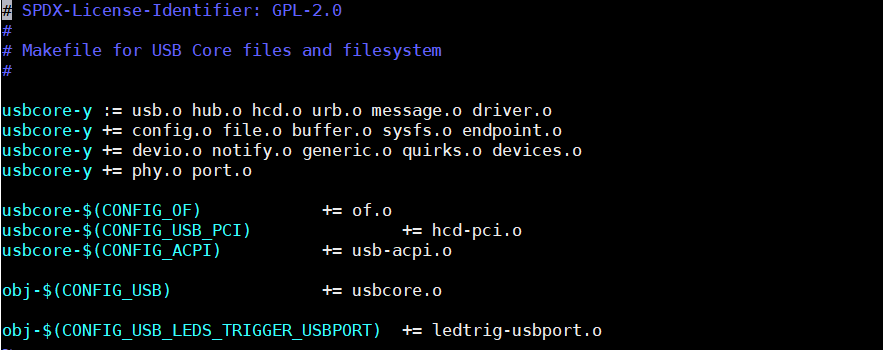
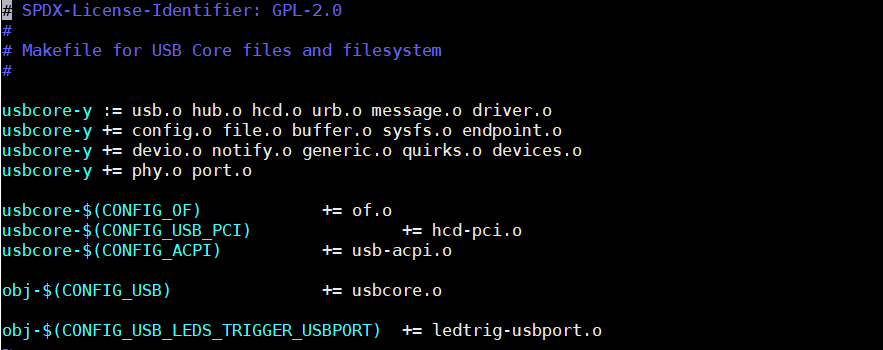
USBcore源码位于./drivers/usb/core,其中的Makefile摘要如下,
在./drivers/usb/core/usb.c里实现了初始化,源代码如下:
bus
device_driver
device
static int __init usb_init(void)
{
    retval = usb_debugfs_init();        //1.usb debugfs初始化
        if (retval)
                goto out;
    retval = bus_register(&usb_bus_type); //注册USB总线,也就是USB子系统
    if (retval)
        goto bus_register_failed;
    retval = bus_register_notifier(&usb_bus_type, &usb_bus_nb); //注册内核通知链,用于设备和接口注册的通知
    if (retval)
        goto bus_notifier_failed;
    retval = usb_major_init(); //usb主设备号初始化
    if (retval)
        goto major_init_failed;
    retval = usb_register(&usbfs_driver); //注册usb文件系统
    if (retval)
        goto driver_register_failed;
    retval = usb_devio_init();  //usb设备字符设备初始化
    if (retval)
        goto usb_devio_init_failed;
    retval = usb_hub_init(); //usb hub初始化
    if (retval)
        goto hub_init_failed;
    retval = usb_register_device_driver(&usb_generic_driver, THIS_MODULE); //注册一个USB设备(不是接口)驱动程序
    if (!retval)
        goto out;
}usbcore注册了USB总线,USB文件系统,USBHub以及USB的设备驱动usb generic driver等。
三、usb debugfs初始化
static int usb_debugfs_init(void)
{
    usb_debug_root = debugfs_create_dir("usb", NULL);   //创建"$(debugfs)/usb"
    if (!usb_debug_root)
        return -ENOENT;
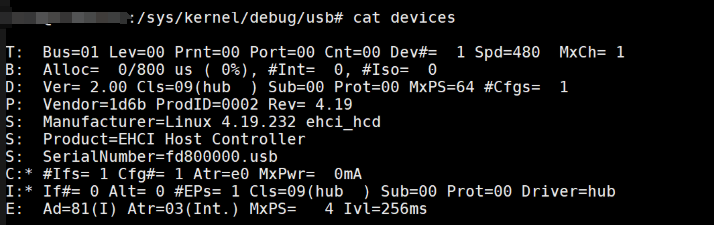
    //创建"$(debugfs)/usb/device",捆绑usbfs_devices_fops结构体,位置 /sys/kernel/debug/usb/device,打印所有总线下的设备
    usb_debug_devices = debugfs_create_file("devices", 0444,usb_debug_root, NULL,&usbfs_devices_fops);
}四、usb总线的注册
struct bus_type usb_bus_type = {
    .name = "usb",  //总线名
    .match =    usb_device_match,   //匹配方法,应该用于usb驱动id_table的匹配
    .uevent =   usb_uevent, //事件处理
};
static int usb_device_match(struct device *dev, struct device_driver *drv)
{
        /* devices and interfaces are handled separately */
        if (is_usb_device(dev)) {

                /* interface drivers never match devices */
                if (!is_usb_device_driver(drv))
                        return 0;

                /* TODO: Add real matching code */
                return 1;

        } else if (is_usb_interface(dev)) {
                struct usb_interface *intf;
                struct usb_driver *usb_drv;
                const struct usb_device_id *id;

                /* device drivers never match interfaces */
                if (is_usb_device_driver(drv))
                        return 0;

                intf = to_usb_interface(dev);
                usb_drv = to_usb_driver(drv);

                id = usb_match_id(intf, usb_drv->id_table);
                if (id)
                        return 1;

                id = usb_match_dynamic_id(intf, usb_drv);
                if (id)
                        return 1;
        }

        return 0;
}usb_match_id
const struct usb_device_id *usb_match_id(struct usb_interface *interface,
                                         const struct usb_device_id *id)
{
        /* proc_connectinfo in devio.c may call us with id == NULL. */
        if (id == NULL)
                return NULL;

        /* It is important to check that id->driver_info is nonzero,
           since an entry that is all zeroes except for a nonzero
           id->driver_info is the way to create an entry that
           indicates that the driver want to examine every
           device and interface. */
        for (; id->idVendor || id->idProduct || id->bDeviceClass ||
               id->bInterfaceClass || id->driver_info; id++) {
                if (usb_match_one_id(interface, id))
                        return id;
        }

        return NULL;
}
EXPORT_SYMBOL_GPL(usb_match_id);五、注册usb总线通知链
int bus_register_notifier(struct bus_type *bus, struct notifier_block *nb)
{
    return blocking_notifier_chain_register(&bus->p->bus_notifier, nb);
}当总线添加删除设备的时候会调用usb_bus_nb指定的notifier_cal方法,既usb_bus_notify
static int usb_bus_notify(struct notifier_block *nb, unsigned long action,void *data)
{
    struct device *dev = data;
    switch (action) {
    case BUS_NOTIFY_ADD_DEVICE: //添加设备
        if (dev->type == &usb_device_type)   //usb设备
            (void) usb_create_sysfs_dev_files(to_usb_device(dev)); //生成sysfs节点/sys/devices/platform/soc@0/38100000.usb/xhci-hcd.0.auto/usb1
        else if (dev->type == &usb_if_device_type)   //usb接口
            (void) usb_create_sysfs_intf_files(to_usb_interface(dev));
        break;
    case BUS_NOTIFY_DEL_DEVICE: //删除设备
        if (dev->type == &usb_device_type)   //usb设备
            usb_remove_sysfs_dev_files(to_usb_device(dev));
        else if (dev->type == &usb_if_device_type)   //usb接口
            usb_remove_sysfs_intf_files(to_usb_interface(dev));
        break;
    }
    return 0;
}六、初始化usb主控器字符设备,USB_MAJOR=180
int usb_major_init(void)
{
    int error;
    error = register_chrdev(USB_MAJOR, "usb", &usb_fops);   //注册usb控制器字符设备,捆绑usb_fops
    if (error)
        printk(KERN_ERR "Unable to get major %d for usb devices\n",USB_MAJOR);
    return error;
}捆绑usb_fops
static const struct file_operations usb_fops = {
    .owner =    THIS_MODULE,
    .open = usb_open,
    .llseek =   noop_llseek,
};七、注册usbfs_driver
usb_register(&usbfs_driver); //****通过usb_register()将usbfs驱动提交个设备模型,添加到USB总线的驱动链表里。
/* use a define to avoid include chaining to get THIS_MODULE & friends */
//其实是调用usb_register_driver,注册一个usb接口驱动
#define usb_register(driver) \
usb_register_driver(driver, THIS_MODULE, KBUILD_MODNAME)struct usb_driver usbfs_driver = {
.name = "usbfs", //在/sys/bus/usb/drivers/usbfs
.probe = driver_probe,
.disconnect = driver_disconnect,
.suspend = driver_suspend,
.resume = driver_resume,
};八、usb_devio_init USB_DEVICE_DEV=189
//用于应用程序直接访问usb设备
int __init usb_devio_init(void)
{
    int retval;

    retval = register_chrdev_region(USB_DEVICE_DEV, USB_DEVICE_MAX,
                    "usb_device"); //分配设备号
    if (retval) {
        printk(KERN_ERR "Unable to register minors for usb_device\n");
        goto out;
    }
    cdev_init(&usb_device_cdev, &usbdev_file_operations); //字符设备初始化
    retval = cdev_add(&usb_device_cdev, USB_DEVICE_DEV, USB_DEVICE_MAX); //添加字符设备
    if (retval) {
        printk(KERN_ERR "Unable to get usb_device major %d\n",
              USB_DEVICE_MAJOR);
        goto error_cdev;
    }
    usb_register_notify(&usbdev_nb); //注册设备通知链
}usb注册的通知链
void usb_register_notify(struct notifier_block *nb)
{
    blocking_notifier_chain_register(&usb_notifier_list, nb);
}sb通知链表头为usb_notifier_list
在/drivers/usb/core/notify.c文件中,有四个函数()对usb_notifier_list中发送通知,这四个函数如下:
usb_notify_add_device //有设备添加usb_notify_remove_device //有设备移除usb_notify_add_bus //总线添加usb_notify_remove_bus //总线移除
当这些事件发生后会调用usbdev_nb指定的notifier_cal方法,既usbdev_notify
static int usbdev_notify(struct notifier_block *self,
                   unsigned long action, void *dev)
{
    switch (action) {
    case USB_DEVICE_ADD:
        break;
    case USB_DEVICE_REMOVE:
        usbdev_remove(dev);
        break;
    }
    return NOTIFY_OK;
}八、usb hub初始化
后续详细分析
九、usb注册通用设备驱动
int usb_register_device_driver(struct usb_device_driver *new_udriver,struct module *owner)

{
    int retval = 0;
    if (usb_disabled())
        return -ENODEV;
    new_udriver->drvwrap.for_devices = 1;    //usb设备
    new_udriver->drvwrap.driver.name = (char *) new_udriver->name;    //设备名
    new_udriver->drvwrap.driver.bus = &usb_bus_type; //总线类型
    new_udriver->drvwrap.driver.probe = usb_probe_device;    //probe方法
    new_udriver->drvwrap.driver.remove = usb_unbind_device;  //remove方法
    new_udriver->drvwrap.driver.owner = owner;   //模块所有者
    retval = driver_register(&new_udriver->drvwrap.driver);  //注册设备驱动
    if (!retval) {
        pr_info("%s: registered new device driver %s\n",usbcore_name, new_udriver->name);
        usbfs_update_special();
    } else {
        printk(KERN_ERR "%s: error %d registering device driver %s\n",usbcore_name, retval, new_udriver->name);
    }
    return retval;
}usb_device_driver结构体是usb_driver的简化版本,这里注册的是usb设备(非接口)驱动。
usb总线的match方法对usb设备和usb接口做了区分处理,针对usb设备,直接match的,(分析match时候再细化)
然后调用usb设备驱动的probe方法
static int usb_probe_device(struct device *dev)
{
    struct usb_device_driver *udriver = to_usb_device_driver(dev->driver);
    struct usb_device *udev = to_usb_device(dev);
    int error = 0;
    dev_dbg(dev, "%s\n", __func__);
    if (!udriver->supports_autosuspend)  //条件成立
        error = usb_autoresume_device(udev);
    if (!error)
        error = udriver->probe(udev);    //调用usb_device_driver的probe方法
    return error;
}接着调用usb_generic_driver的probe方法
struct usb_device_driver usb_generic_driver = {
    .name =    "usb",
    .probe = generic_probe,
    .disconnect = generic_disconnect,
#ifdef    CONFIG_PM
    .suspend = generic_suspend,
    .resume = generic_resume,
#endif
    .supports_autosuspend = 1,
};对应到root hub,流程会转入到generic_probe().代码如下:
static int generic_probe(struct usb_device *udev)
{
    /* Choose and set the configuration.  This registers the interfaces
     * with the driver core and lets interface drivers bind to them.
     */
    if (udev->authorized == 0) //至于udev->authorized,在root hub的初始化中,是会将其初始化为1的.后面的逻辑就更简单了.为root hub 选择一个配置然后再设定这个配置.
        dev_err(&udev->dev, "Device is not authorized for usage\n");
    else {
        c = usb_choose_configuration(udev); //Usb2.0 spec上规定,对于hub设备,只能有一个config,一个interface,一个endpoint.实际上,在这里,对hub的选择约束不大,反正就一个配置,不管怎么样,选择和设定都是这个配置.
        if (c >= 0) {
            err = usb_set_configuration(udev, c);
            if (err && err != -ENODEV) {
                dev_err(&udev->dev, "can't set config #%d, error %d\n",
                    c, err);
                /* This need not be fatal.  The user can try to
                 * set other configurations. */
            }
        }
    }
    /* USB device state == configured ... usable */
    usb_notify_add_device(udev);
    return 0;
}